 11
11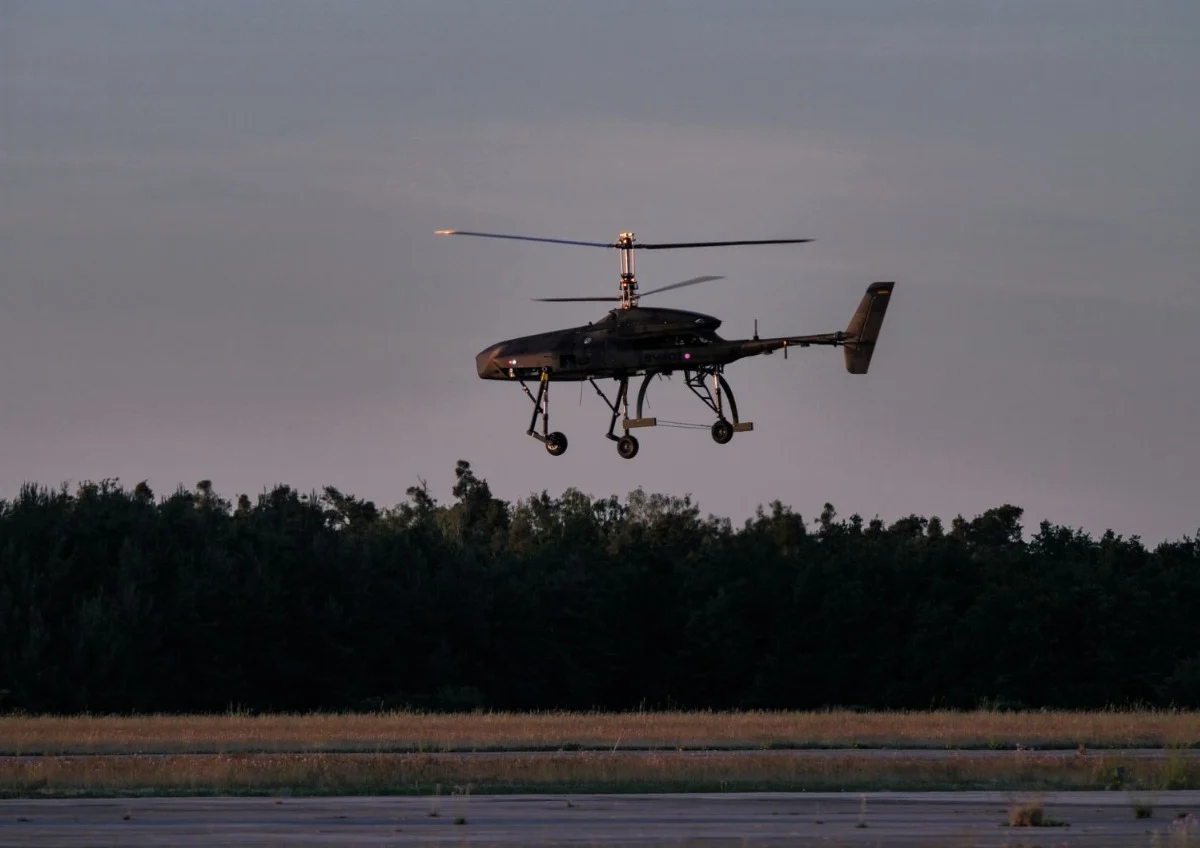
Wespe unmanned helicopter has completed its first flight, marking a key step for Germany’s unmanned casualty evacuation plans.
German company Aerospace completed the first flight of its Wespe 9Y-01 prototype on Thursday. The unmanned helicopter showed stable and controlled performance during the test.
The aircraft flew under remote pilot control from the RasCore Ground control station. The flight included hovering, forward movement and lateral movement.
The first flight focused on basic rotary-wing control. This matters because stable hover is essential before wider flight testing begins.
The test also confirmed early handling behaviour under remote control. However, the aircraft still needs further development before operational use.
Aerospace designed Wespe around a clear military medical problem. The platform aims to move critically wounded soldiers from forward field hospitals to surgical facilities.
This mission can be dangerous for crewed helicopters. Low-altitude evacuation routes may expose pilots and medical crews to air defence systems, drones and radar-guided weapons.
An unmanned helicopter changes the risk calculation for commanders. It can support casualty transport without placing another crew inside the aircraft.
That does not remove all battlefield risk. Nevertheless, it may reduce the human cost of evacuation missions in contested airspace.
Wespe sits between light tactical drones and full-size military helicopters. Its payload, range and containerised design make it closer to a tactical logistics aircraft.
The piston engine configuration carries up to 200 kg, or 441 lb, of payload. The turbine engine option increases payload to 350 kg, or 772 lb.
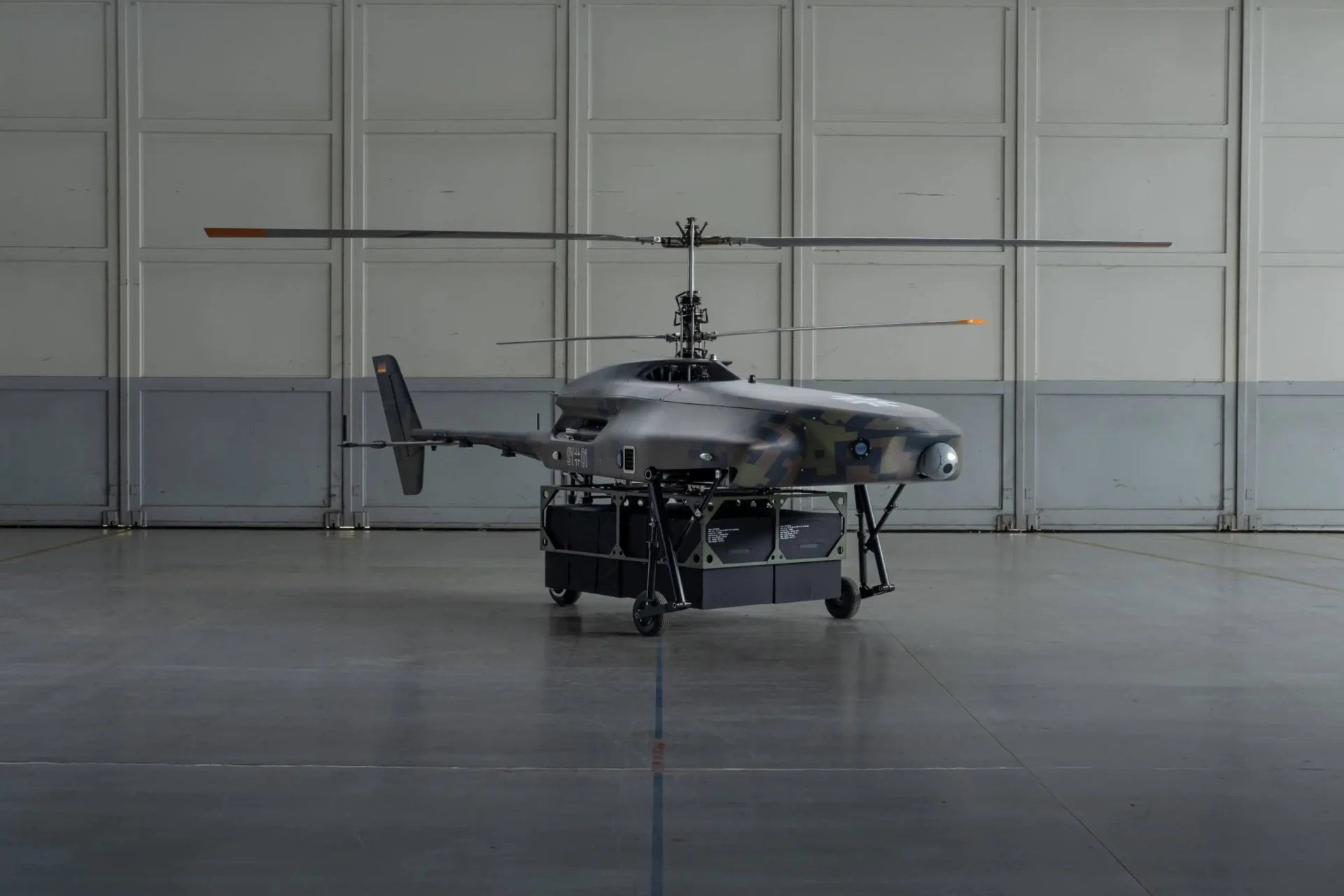
The piston version has a maximum take-off weight of 650 kg, or 1,433 lb. The turbine version raises that figure to 900 kg, or 1,984 lb.
These figures matter for casualty evacuation. A system in this weight class can support missions beyond small drone delivery tasks.
Wespe has a cruise speed of 120 km/h, or 67.5 knots. Its maximum range reaches 300 km, or 162 nautical miles.
The aircraft also has a service ceiling of 5,500 m, or 18,045 ft. This gives it potential value in mountainous terrain and demanding theatre conditions.
Military medical evacuation depends on distance and speed. Wounded personnel may need rapid movement from tactical points to surgical facilities.
Wespe’s stated range gives it a practical mission envelope for that role. However, actual use will depend on payload, weather and operational conditions.
The aircraft has a 6.5 m, or 21 ft, rotor diameter. Its enclosing diameter is 7.2 m, or 23.6 ft.
Aerospace says the whole system fits inside a standard 20-foot ISO container. According to Avilus’ official maiden flight announcement, the first-generation Wespe 9Y-01 demonstrated stable controlled flight.
Containerisation gives Wespe a practical logistics advantage. Armed forces can move the system using existing transport methods.
This may support forward operating bases and naval deployment. It could also help ships that lack full helicopter capacity.
Wespe offers two engine paths with different fuel requirements. The piston engine variant uses unleaded gasoline.
The turbine engine accepts military jet fuels. These include NATO F-34, also known as JP-8, and F-44, also known as JP-5.
Fuel compatibility is more than a technical detail. A system using common military fuels can draw from existing supply chains.
That can reduce pressure on deployed units. It also avoids a specialised fuel stream during fast-moving operations.
Aerospace integrated Hensoldt systems into the Wespe prototype. These include the AMPS self-protection system and ARGOS optics.
AMPS stands for Airborne Missile Protection System. It provides detection and countermeasures against infrared-guided missiles.
ARGOS is a multi-aperture reconnaissance and observation sensor. It gives the aircraft situational awareness for complex environments.
This sensor package can support navigation and payload delivery. In addition, it may help future autonomous or semi-autonomous mission control.
Carlos Hünteler, Wespe’s chief engineer, said the crew and aircraft were ready. He said the flight confirmed that confidence.
The next phases will expand the flight envelope. That means higher speeds, higher altitudes and more demanding manoeuvres.
Aerospace also plans to integrate mission control abilities. These will support functions beyond basic remote pilot control.
That step will be important for military use. Casualty evacuation and logistics missions need reliable flight management, not only manual operation.
Wespe’s first flight matters because it targets a real battlefield problem. Medical evacuation remains vital, but crewed helicopter missions are becoming more dangerous.
The platform’s strongest value may sit in risk reduction. It could move casualties or payloads without exposing pilots to predictable low-altitude routes.
Its containerised design also adds operational value. A 20-foot ISO container format can simplify transport, storage and forward positioning.
The Hensoldt AMPS and ARGOS integration suggests Aerospace is thinking beyond a basic demonstrator. Still, the system must prove performance through wider flight testing.
For defence planners, Wespe points to a growing trend. Unmanned rotary-wing systems are moving into missions once dominated by crewed helicopters.
For wider unmanned aviation coverage, read our Air Systems coverage on DMX Defence.