 11
11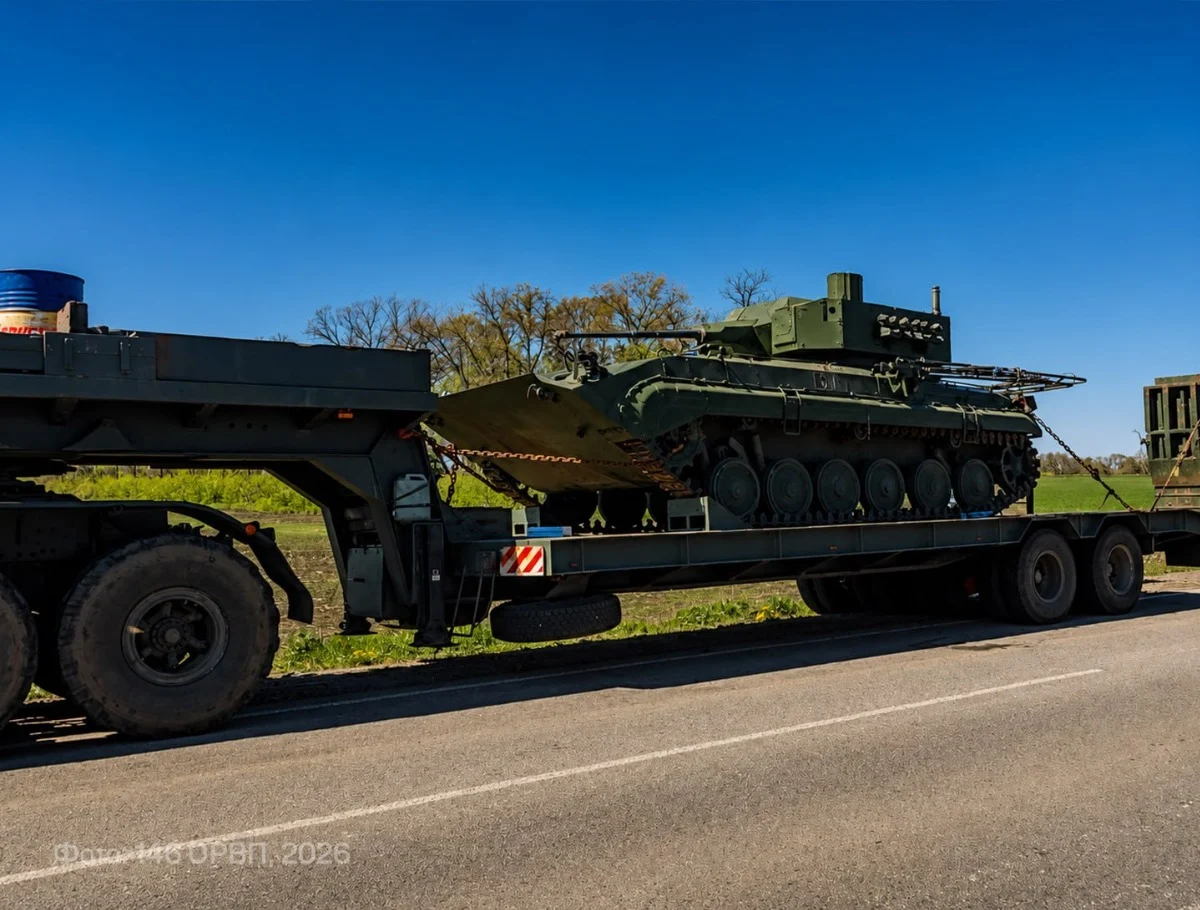
Guardian 30 turret integration gives Ukraine a stronger firepower option for Soviet-era BMP infantry fighting vehicles.
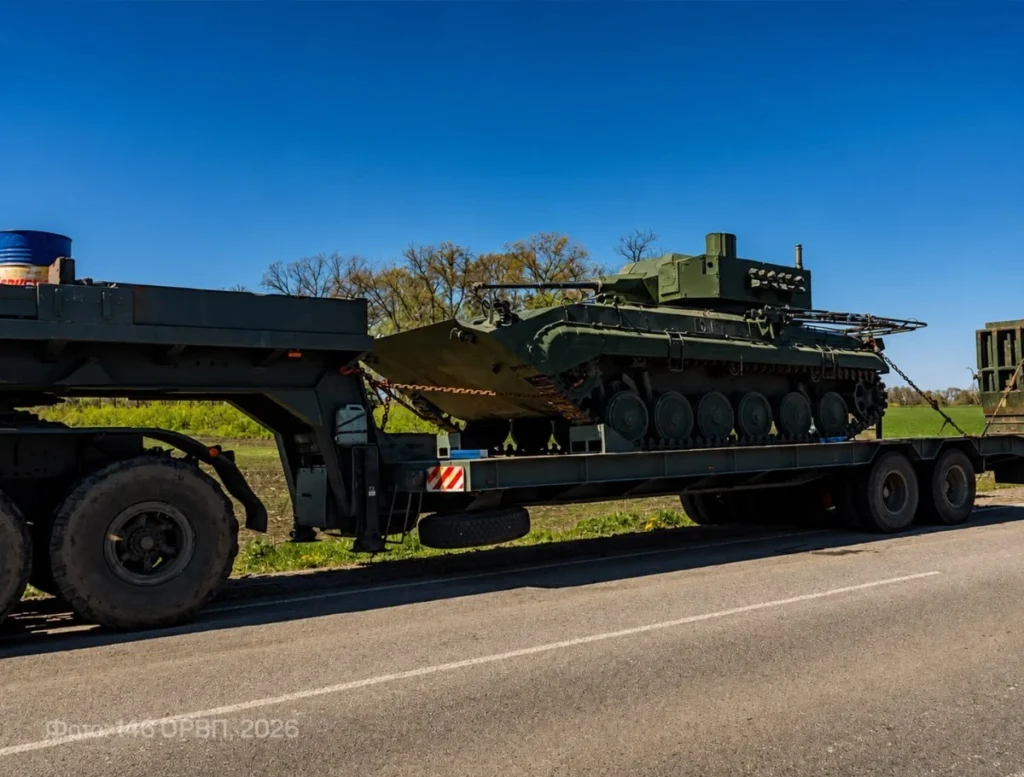
Ukraine’s 146th Separate Repair and Restoration Regiment has published photographs of a Soviet-era BMP infantry fighting vehicle. The vehicle carries a Spanish GUARDIAN 30 remote weapon station.
The photographs appeared on the regiment’s official social media page. They show a standard BMP hull fitted with the new turret.
The GUARDIAN 30 replaces the original conical Soviet turret. That older turret had been part of the vehicle’s factory configuration for decades.
This change gives the BMP a major combat upgrade. It also shows how Ukraine is keeping old hulls relevant during wartime.
The GUARDIAN 30 turret is produced by Madrid-based Escribano Mechanical and Engineering. It is a fully stabilised remote weapon station.
Because the system operates remotely, no crew member needs to stand exposed above the hull. This gives crews better protection during direct-fire missions.
According to Escribano’s official GUARDIAN page, the GUARDIAN 30 is designed for armoured vehicles and supports 30mm cannon integration.
The turret carries a 30mm MK44S Bushmaster II autocannon. It also includes a 7.62mm coaxial machine gun and 12 smoke grenade launchers.
Its sensor package uses a dual electro-optical system. This combines a cooled infrared camera, laser rangefinder and day sight camera.
The complete package weighs under 1,250 kilograms, or 2,756 pounds. That figure excludes weapons and ammunition.
The turret rotates 360 degrees in azimuth. Its elevation range extends from minus 20 degrees to plus 60 degrees.
This geometry has clear tactical value. It helps crews address threats from elevated positions and rooftops.
Urban fighting often places vehicles under attack from above. Therefore, wider elevation angles can improve reaction options in close terrain.
The BMP entered Soviet Army service in 1966. Its original weapon system belongs to a much older battlefield era.
The vehicle used the 73mm 2A28 Grom smoothbore gun. That gun was already criticised before the Cold War ended.
The Grom fires rocket-assisted rounds. However, it has poor accuracy beyond about 800 metres, or 875 yards.
Its semi-manual loading also slows the rate of fire. In addition, its optical sighting system dates from the 1960s.
In its original form, the BMP-1 can still move troops. However, it gives limited direct-fire support in current battlefield conditions.
Ukraine faces drones, counter-battery radars and fortified positions. Because of this, a stronger turret can change how the same hull performs.
A stabilised 30mm autocannon can engage targets beyond 2 kilometres, or 1.2 miles. Fire-control-system accuracy also improves practical use while moving.
This does not make the BMP a new vehicle. Instead, it gives an old platform a more useful modern weapon package.
Ukrainian officials confirmed in May 2025 that GUARDIAN 30 systems were arriving in Ukraine. Escribano Mechanical and Engineering produced those remote weapon stations.
Ukroboronprom General Director Oleh Hulyak thanked foreign partners for cooperation. He also said Ukraine planned to deepen cooperation to increase armoured vehicle combat power.
The May 2025 announcement referenced GUARDIAN 30 systems with older Soviet armoured personnel carrier hulls. This showed official support on both the Ukrainian and Spanish sides.
That point matters because integration work needs more than hardware. It also requires planning, installation knowledge and sustainment support.
The GUARDIAN 30 has built a strong operational and commercial record since Escribano launched it in 2020. More than 800 units have been sold across Europe and the Middle East.
The cooled infrared camera has a detection range of 19.1 kilometres, or 11.9 miles. The laser rangefinder has accuracy of plus or minus one metre at up to 15 kilometres, or 9.3 miles.
The stabilisation rating sits below 0.2 milliradians. This supports more accurate fire when the vehicle moves across rough terrain.
For Ukrainian crews, this is important. Moving vehicles are harder targets, but older sighting systems reduce firing accuracy during movement.
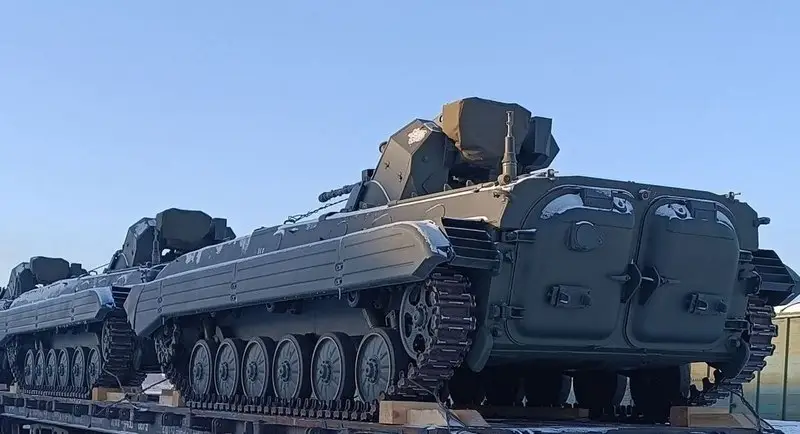
The MK44S Bushmaster II fires NATO-standard 30mm ammunition. The same autocannon is used in the American Bradley infantry fighting vehicle and the Australian AS21 Redback.
The cannon can defeat light armoured vehicles, soft-skinned targets and low-flying drones. These are target sets the original Grom struggles to address.
NATO-standard ammunition adds another layer of practical value. It can help Ukraine align upgraded platforms with Western supply streams.
However, ammunition supply still matters. A turret upgrade only brings full value if shells, spare parts and maintenance support remain available.
The GUARDIAN 30 integration onto a BMP hull appears less complex than some upgrade programmes. The system’s design supports installation on armoured platforms not originally configured for it.
Its turret ring dimensions are adaptable. Meanwhile, the remote operation electronics connect to the crew compartment instead of needing a crew member in the turret.
Ukraine has pursued several BMP-1 upgrade routes during the war. One example is the domestically developed BMP-1TS.
That system replaces the original turret with a Ukrainian unmanned station. It carries a 30mm ZTM-1 autocannon and Barrier anti-tank missiles.
The Guardian 30 turret photographed by the 146th regiment appears to represent a separate upgrade path. It uses Spanish hardware rather than only domestic development.
This approach gives Ukraine flexibility. It can modernise older BMP-1 hulls through several parallel routes.
The main value sits in tactical usefulness. A BMP with better sensors, stabilised 30mm fire and remote operation can support infantry more effectively.
The upgrade also reflects a wider trend in the war. Armies are using remote weapon stations to extend the life of legacy armoured vehicles.
For Ukraine, the key issue will be scale. One photographed vehicle matters, but wider impact depends on how many BMP hulls receive similar upgrades.
For wider armoured vehicle coverage, read our Land Systems coverage on DMX Defence.
The next point to watch is how many GUARDIAN 30 systems Ukraine can integrate. Photographs confirm at least one visible BMP configuration, but fleet scale remains the key question.
Sustainment will also matter. Crews need training, spare parts, ammunition and repair knowledge to keep upgraded vehicles active.
If Ukraine can scale the programme, older BMP hulls could gain renewed combat value. However, each upgrade will still depend on hull condition and battlefield demand.