 11
11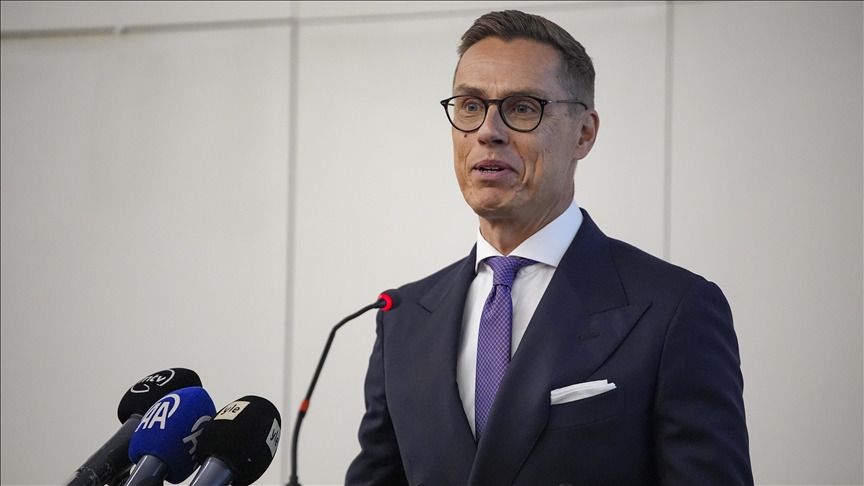
Turkey EU enlargement returned to Europe’s security debate after Finland’s President Alexander Stubb backed a wider EU vision.
Finnish President Alexander Stubb has called for the European Union to think towards a much larger bloc. He suggested that the EU should move towards about 40 member countries.
His remarks included the United Kingdom, Canada, Norway, Iceland, the Western Balkans and Turkey. He also pointed to Ukraine, Moldova and Georgia as key enlargement cases.
Stubb said Europe should also think seriously about Turkey after considering Ukraine, Moldova and Georgia. He argued that Turkey receives too little attention in current EU discussions.
His message did not amount to an official EU decision. However, it placed Turkey back inside a broader European security conversation.
Stubb framed Turkey mainly through a security lens. He said Europe should open its mind to keeping Turkey as close as possible.
That wording matters because it avoids a narrow accession debate. Instead, it treats Turkey as part of Europe’s wider strategic environment.
According to regional reporting on Stubb’s EU enlargement remarks , he argued that expansion has strengthened the EU’s influence on the global stage.
Turkey sits at the edge of several security theatres. Its defence posture affects the Black Sea, the Eastern Mediterranean, the Balkans and the Middle East.
For European policymakers, that geography creates a practical question. Should Turkey remain distant, or should Europe build closer security ties?
Stubb’s wider idea is not limited to Turkey. He mentioned a larger European framework that could include current candidates and close partners.
This vision also includes countries outside the classic enlargement track. The United Kingdom, Canada, Norway and Iceland all appeared in his broader examples.
The proposal fits Stubb’s wider thinking on flexible European integration. He has argued that Europe needs more practical forms of cooperation.
That does not mean every country would follow the same route. Some could seek full membership, while others may need flexible partnership models.
Stubb placed Ukraine, Moldova and Georgia near the centre of the enlargement debate. These countries have gained greater importance since Russia’s full-scale war against Ukraine.
Their cases changed the political mood around enlargement. The EU now views expansion not only as bureaucracy, but also as geopolitical positioning.
This is where Turkey becomes relevant again. If enlargement supports European security, then Turkey’s role becomes harder to ignore.
Turkey is already linked to Europe through NATO and long-running EU accession history. The European Commission says Turkey applied in 1987 and became eligible to join the EU in 1999, according to the Commission’s candidate countries page.
Turkey has been a NATO member since 1952. NATO’s member list also records Turkey’s accession year as 1952.
This gives Stubb’s argument an important defence angle. Turkey is not outside Europe’s security system, even if EU accession talks remain politically difficult.
NATO membership means Turkey already shares alliance commitments with most EU states. However, EU political ties have remained more complicated.
That gap creates a strategic problem for Europe. Defence cooperation and political alignment do not always move at the same speed.
Stubb’s comments may not change EU policy immediately. Still, they challenge a common habit in Brussels and European capitals.
Turkey is often discussed only through disputes, migration or frozen accession talks. Stubb instead pushed the debate towards strategic necessity.
The practical question is not whether Turkey joins the EU tomorrow. No such timetable exists in the remarks.
The issue is whether Europe can afford to keep Turkey at arm’s length. In security terms, Stubb suggested that distance carries its own cost.
A serious Turkey EU enlargement debate would still face major obstacles. EU accession requires political, legal and institutional alignment.
Turkey’s path has been difficult for many years. Therefore, closer security cooperation may be more realistic than rapid full membership.
Stubb did not present a detailed accession roadmap. He also did not say Turkey should bypass normal EU rules.
That distinction is important. His remarks are best read as a strategic signal, not a technical enlargement plan.
Stubb’s comments matter because they connect enlargement with security power. Europe is trying to define its role in a more unstable global order.
A larger EU could gain more weight, but it would also face harder decision-making. Expansion would bring new strategic depth and new political complexity.
Turkey is central to that tension. It is a major security actor, but its EU track remains politically sensitive.
For DMX Defence readers, the key value is the security framing. Stubb did not only speak about institutions; he spoke about Europe’s strategic reach.
The debate also reflects a wider trend. European leaders increasingly view partnerships, defence ties and enlargement as parts of the same security picture.
The next step depends on whether other European leaders echo Stubb’s argument. A single statement does not reopen Turkey’s accession path by itself.
However, it can shift how policymakers discuss Turkey. Security may become the strongest argument for closer engagement.
The EU will also need to balance Ukraine, Moldova, Georgia and the Western Balkans. These cases already require major institutional attention.
If Europe moves towards flexible integration, Turkey could return as a serious strategic question. That would not guarantee membership, but it would reduce political silence around Ankara.