 11
11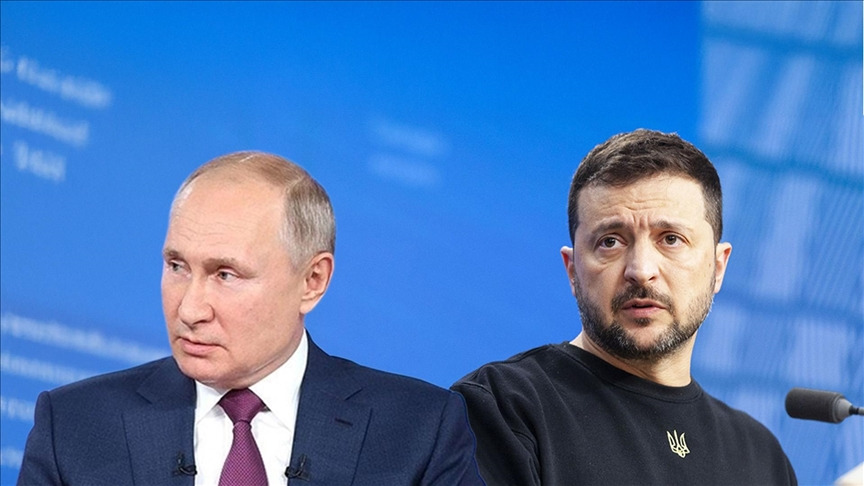
Zelensky Putin letter has sharpened Ukraine’s political message by framing Russia’s war as Vladimir Putin’s personal choice.
Ukrainian President Volodymyr Zelensky has sent an open letter to Russian President Vladimir Putin. The message directly challenges Moscow’s public justifications for the war.
Zelensky argued that the conflict cannot be explained away through NATO, geopolitics or the Russian language. He said the war remains Putin’s personal decision.
The letter’s central line is direct. Zelensky told Putin that “this war is your personal choice.”
That wording matters because it targets political responsibility. It also rejects Russia’s broader narrative that the invasion came from outside pressure.
Zelensky said the war had no real reason. He added that history would remember it that way.
This is a political argument, not a battlefield claim. It tries to separate Russia’s official explanations from the human cost of the invasion.
According to reporting on Zelensky’s letter to Putin , the Ukrainian leader used the message to push Moscow towards ending the war.
The letter speaks to Putin, but it also targets wider audiences. These include Russians, Ukrainians and international partners.
For Ukraine, the message supports a wider information strategy. Kyiv wants the war seen as a Kremlin decision, not an unavoidable historical process.
Zelensky said Putin did not expect full-scale resistance from Ukraine. He also said Putin did not expect events to go this far.
That point is important in the fifth year of full-scale conflict. Ukraine remains independent despite earlier predictions that it could quickly fall.
Zelensky said Ukraine is preserving its independence. He also stated that Ukraine will continue to do so.
This keeps sovereignty at the centre of the message. It shows that Kyiv sees survival, not compromise under pressure, as the main issue.
Zelensky urged Putin not to fear leaving the war. He said this is now the main thing required from Russia’s leader.
The statement is designed to place responsibility for peace on Moscow. It suggests that Russia still has the power to stop the conflict.
Zelensky also said Ukraine does not want permanent war. He argued that Ukrainians know peace is immeasurably better than war.
This line matters because it counters a common Russian claim. Kyiv is presenting itself as ready for peace, but not ready to surrender independence.
Zelensky warned Putin that he would not have enough money and political power forever. He linked this to what he called 26 years of buying Russian loyalty.
The claim is political rather than military. It targets the durability of Putin’s domestic power system.
Zelensky said Ukraine would do everything to make that message known to the world. This shows how Kyiv uses public communication as a strategic tool.
The letter is therefore not only a diplomatic message. It is also part of Ukraine’s wider effort to shape global opinion.
Zelensky ended by echoing Putin’s own phrase. He said that, as Putin himself had said, everything must be accounted for.
This line adds an accountability frame to the letter. It signals that Ukraine wants responsibility for the war documented and remembered.
The letter comes at a time when political messaging remains central to the war. Ukraine needs military support, but it also needs narrative strength.
By addressing Putin directly, Zelensky personalises the decision to continue the war. That helps Kyiv argue that peace depends on Moscow’s political choice.
The Zelensky Putin letter matters because it links battlefield endurance with political responsibility. Ukraine is not only saying it can resist; it is saying Russia chose the war and can choose to end it.
The message also serves international security aims. It reinforces Ukraine’s case that the war is not a local dispute, but a test of sovereignty and state survival.
For European and NATO audiences, the letter keeps attention on Russia’s decision-making. That is important as war fatigue, aid debates and diplomatic pressure continue.
The letter also targets Russian society indirectly. By saying Putin has spent 26 years buying loyalty, Zelensky questions the long-term strength of Russia’s political system.
For wider regional security coverage, read our European security analysis on DMX Defence.