 11
11
Drone Round ammunition could give U.S. Marines a rifle-based way to respond to fast FPV drone threats.
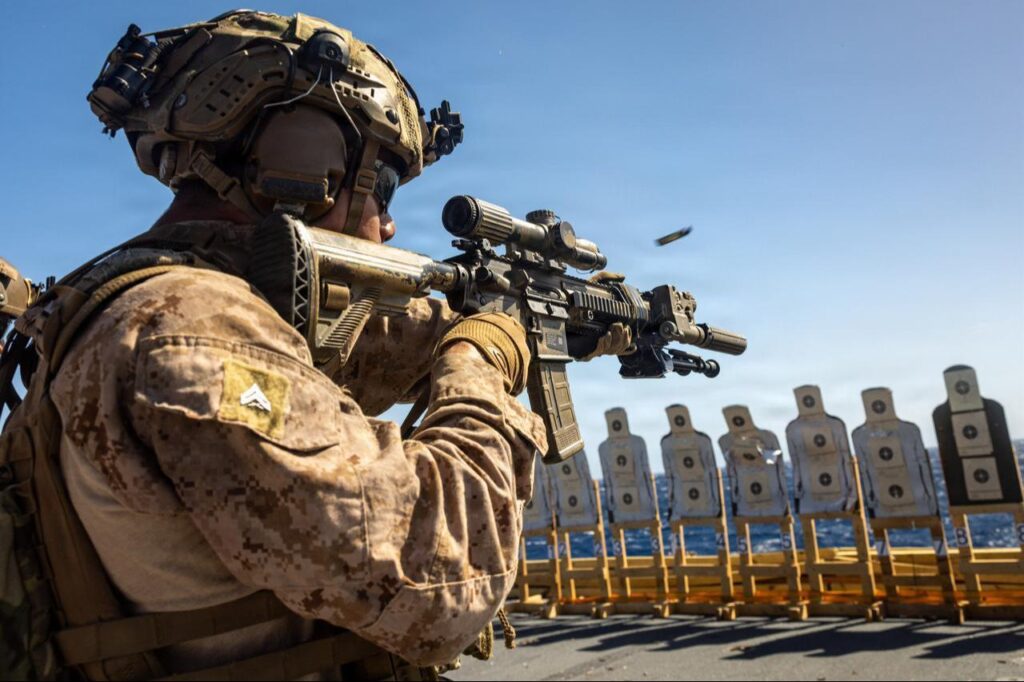
The U.S. Marine Corps aims to procure new 5.56x45mm ammunition for use with M4 and M27 rifles. The rounds are intended to improve defence against small drones.
The ammunition is called the L Variant. It is produced by a company named Drone Round.
The L Variant uses a special core that separates into multiple fragments after firing. This is designed to increase the chance of hitting small and fast aerial targets.
The concept is aimed mainly at FPV kamikaze drones. These drones have become a standard battlefield threat in Ukraine and are spreading rapidly worldwide.
Drone Round ammunition does not require a new rifle. That is its main practical value for infantry units.
Marine Corps Systems Command, known as MARCORSYSCOM, said the 5.56mm L Variant meets its counter-small UAS needs. The service plans a sole-source contract with Drone Round.
According to DefenceTurk’s report on the U.S. Marine Corps plan, the contract is expected to conclude in December 2026.
The published document said the L Variant is the only kinetic solution in the current defence market that meets Marine Corps c-sUAS needs.
It also stated that the round can be used directly in M27 and M4 rifles. No physical modification or special part is required.
Drone Round has offered two ammunition variants since 2025. Both are designed for existing weapons without modification.
The L Variant separates into five core fragments. It is effective out to about 100 metres.
The K Variant separates into eight core fragments. It is effective out to about 50 metres.
Both rounds are described by the company as full-auto and suppressor compatible. That matters because Marines may need rapid fire during close drone encounters.

FPV kamikaze drones have changed infantry protection needs. They can appear quickly, fly low and attack individual soldiers, vehicles or fighting positions.
Electronic warfare and dedicated counter-drone systems help. However, infantry still needs a last-line option when a drone reaches close range.
Standard rifle fire can hit drones, but the target is difficult. FPV drones are small, fast and often approach from awkward angles.
A fragmenting round gives a soldier a wider effect pattern. This may improve hit probability compared with a single conventional bullet.
Compatibility with M4 and M27 rifles is central to the Marine Corps interest. These weapons are already part of the infantry force structure.
That reduces the training and logistics burden. Marines would not need to carry a separate anti-drone launcher for every close-range threat.
The idea supports a simple tactical goal. Every rifleman could gain some level of immediate drone defence.
This does not replace layered C-UAS systems. Instead, it adds a low-level protective tool for moments when larger systems are unavailable.
Drone Round is also testing 7.62x51mm versions. The company is working on 6.8x51mm versions for the U.S. Army’s new M7 rifle.
That work suggests the concept may grow beyond 5.56x45mm. However, the Marine Corps plan currently focuses on the 5.56mm L Variant.
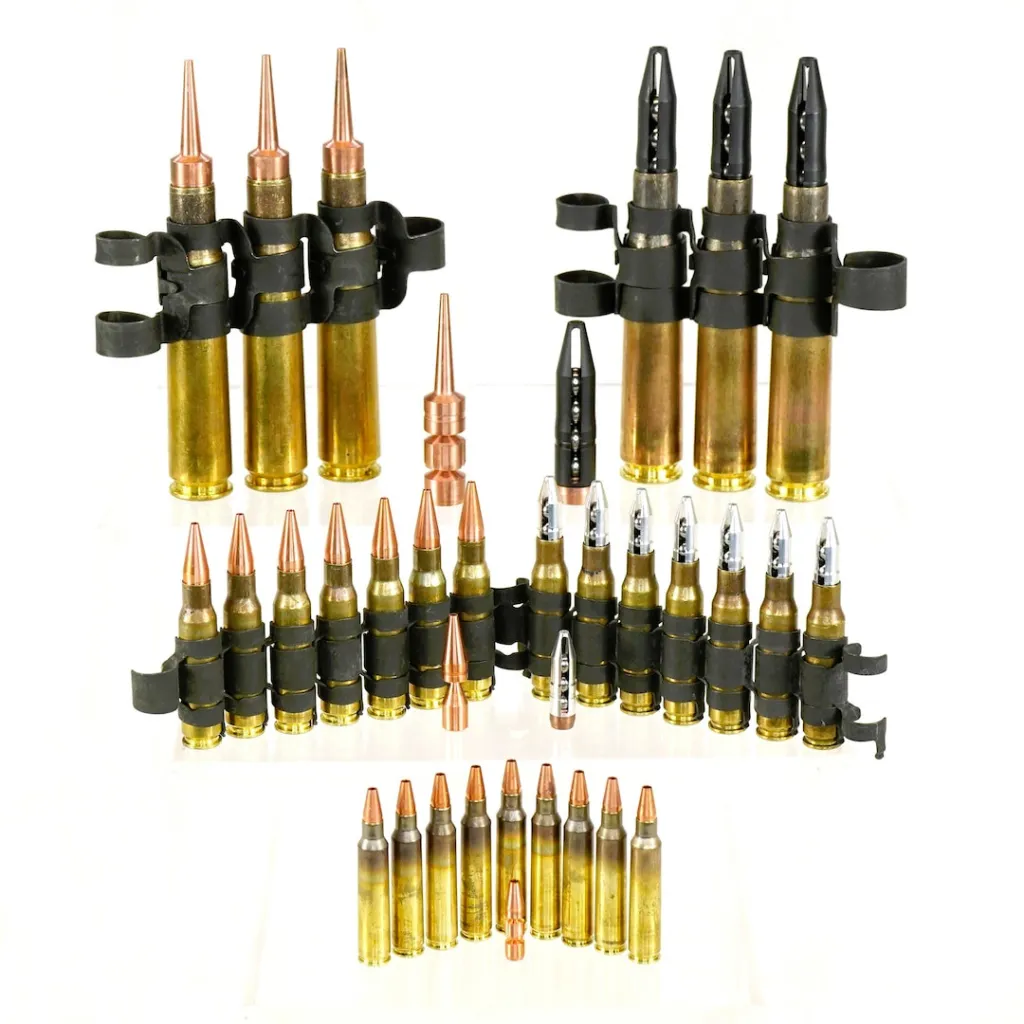
The idea of multi-fragment rifle ammunition is not new. The U.S. Army studied similar concepts during the 1950s and 1960s.
Those earlier efforts did not result in a fielded product. Today’s drone threat has made the concept more relevant again.
Marine Corps interest fits a wider 2024 vision. The service wants every Marine to play a role in drone defence.
The War Zone reported that Colonel Paul Gilikin had previously highlighted the need for industry help. He specifically referred to anti-UAV ammunition for existing weapon systems.
This need reflects a broader infantry problem. Drone defence cannot depend only on expensive interceptors, vehicle systems or electronic warfare.
Small drones are cheap and numerous. Therefore, forces need low-cost defensive tools at squad and individual level.
Drone Round ammunition matters because it brings C-UAS defence closer to the individual Marine. A rifle-based option could help troops react before a drone reaches its target.
The value is also logistical. If the round works in existing M4 and M27 rifles, units can improve protection without changing the weapon itself.
However, this remains a close-range solution. It cannot replace sensors, jammers, shotguns, directed-energy systems or dedicated interceptors.
The main question is tactical reliability. Fast FPV drones leave little time for detection, aim and engagement.
For the Marine Corps, the ammunition could still fill a real gap. It gives infantry a simple kinetic option when other layers fail.
The source also notes that a similar effort has been pursued by MKE. That point shows the same battlefield lesson is being studied outside the United States.
For wider infantry and land warfare coverage, read our Land Systems coverage on DMX Defence.