 11
11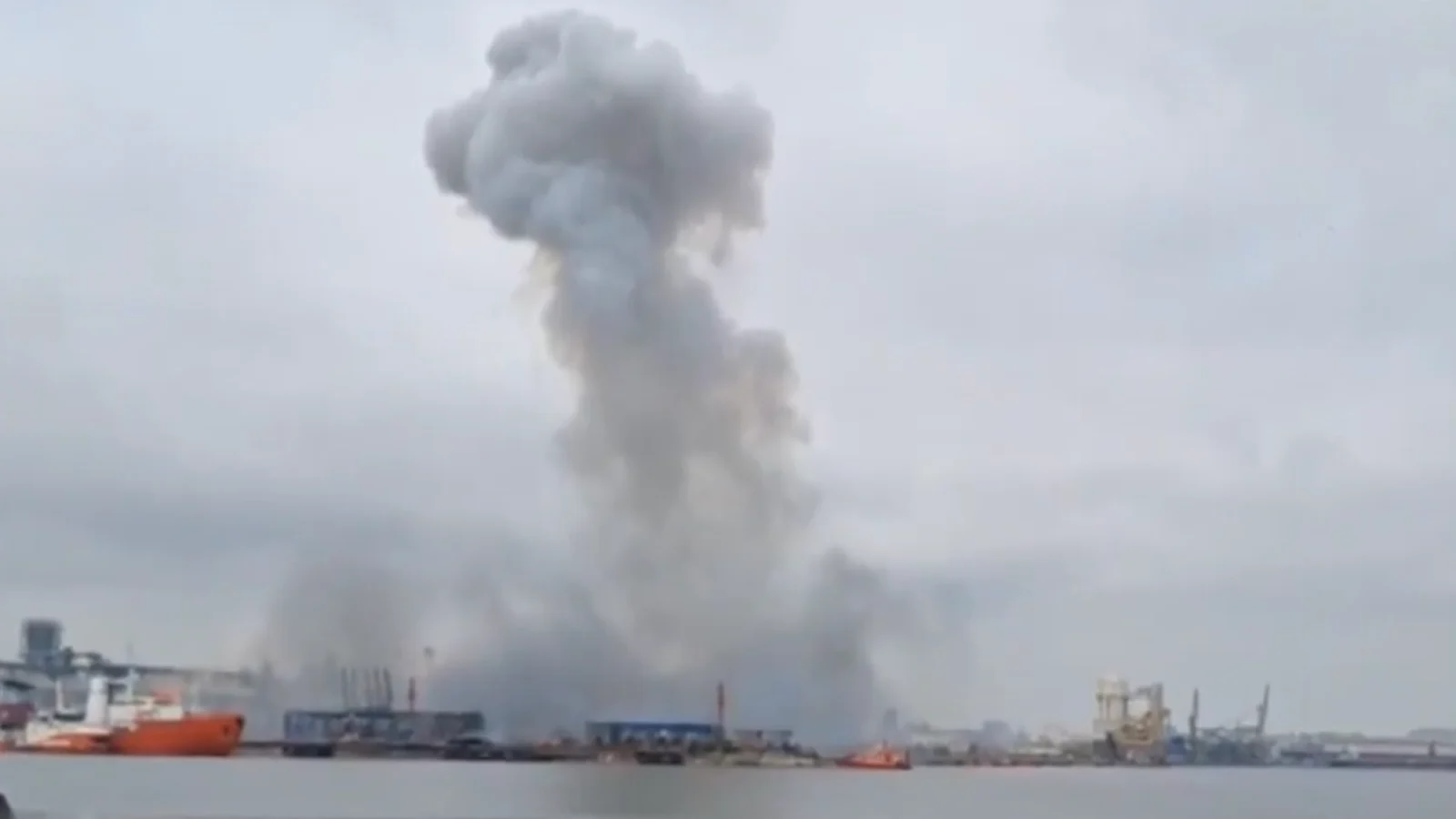
Constanta port explosion has raised fresh NATO concern after a maritime drone detonated near Romania’s Black Sea port.
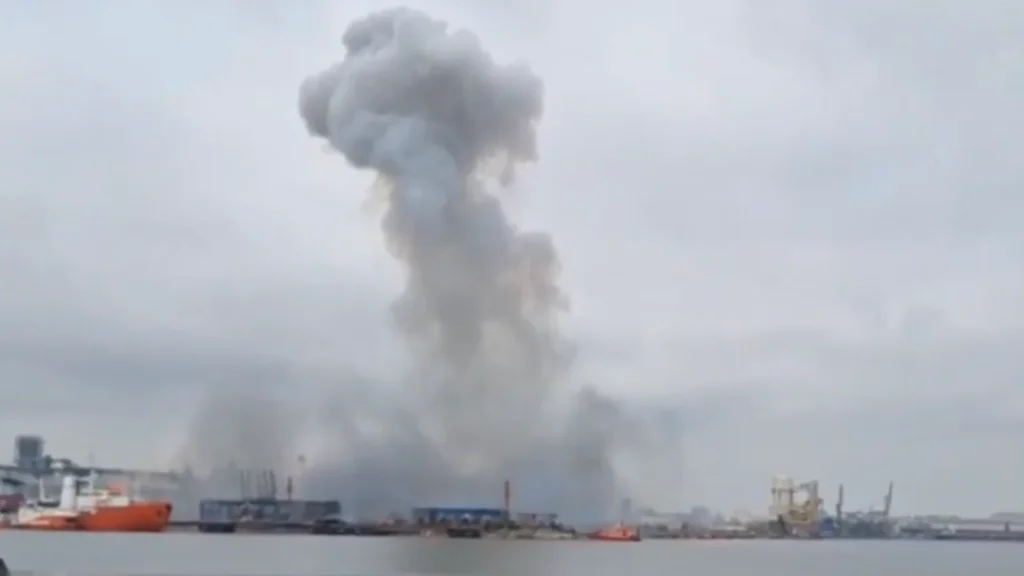
Romanian authorities said a maritime drone exploded near the port of Constanta on June 5. The unmanned surface vessel was of a type used in the Russia-Ukraine war.
The vehicle was detected early in the morning. It later self-detonated at around 10:30 local time.
Authorities evacuated the area before the explosion. No casualties were reported after the blast.
Romania’s Defence Ministry said the drone did not belong to Romania. It described the vehicle as a model used in the war in Ukraine.
The drone reportedly became stuck several hundred metres from the oil terminal at Constanta Port. Reuters reported that it detonated about 500 metres from an oil terminal.
According to Reuters’ report on the Constanta port explosion, Ukraine said Russian electronic warfare caused the maritime drone to drift off cour
Constanta is not an ordinary harbour. It is Romania’s largest Black Sea port and a key route for trade, fuel and Ukrainian exports.
A drone explosion near port energy infrastructure therefore carries wider security meaning. It shows how the war can affect NATO territory without a direct attack order.
Ukraine’s navy said one of its drones lost control in the Black Sea. It blamed Russian electronic warfare for disrupting the vehicle.
Romania was warned in time to act. Romanian Defence Minister Radu Miruta said the warning helped enable a timely evacuation.
This incident shows a difficult problem in modern naval warfare. Electronic warfare can redirect unmanned systems in ways their operators did not intend.
For NATO states near the conflict zone, that creates a border security challenge. A drone can become dangerous even after it leaves its planned mission path.
Romanian President Nicușor Dan said three other Ukrainian drones also lost control. They detonated off the coast, and authorities later said there was no continuing danger.
AP reported that Romanian authorities confirmed four drones had been lost. One detonated in the port, while the other three self-detonated outside the port area.
Romanian emergency teams responded with ships and helicopters. Authorities also removed civilians from nearby beaches and coastal areas as a precaution.
These measures show that maritime drone incidents need more than naval response. They require police, coast guard, intelligence and civilian emergency coordination.
The Constanta event followed another serious drone incident in Romania. On May 29, a Russian-made Shahed-type drone struck an apartment building in Galati.
That crash injured two people. It also increased concern about drone spillover inside a NATO member state.
Romania shares a long border with Ukraine. It has already faced repeated drone debris, airspace incidents and maritime hazards since Russia’s full-scale invasion.
The latest incident adds a naval dimension. Airspace protection is no longer the only issue for NATO’s eastern flank.
Greece recently protested after finding an explosive-laden Ukrainian maritime drone near a Greek island. Kyiv has previously accused Moscow of using electronic warfare to redirect drones towards NATO countries.
This claim remains part of the wider information battle. However, the operational risk is clear: unmanned systems can travel far from their intended routes.
Ukraine has used maritime drones to pressure Russian naval assets in the Black Sea. These systems have become a central tool in asymmetric naval warfare.
However, long-range unmanned operations also create safety problems. A loss of control can move risk from the battlefield into civilian maritime space.
European Council President António Costa expressed solidarity with Romania after the incident. He said such events are a direct result of Russia’s war of aggression against Ukraine.
His statement placed the blast inside a wider European security frame. The EU sees these incidents as part of the conflict’s expanding regional impact.
Russia’s embassy in Romania said it was not involved. It also argued that the drones were not Russian.
That denial does not remove the security issue for Romania. The incident still required evacuation, port security action and NATO-level attention.
The Constanta port explosion matters because it combines three major risks. It involves unmanned naval warfare, electronic warfare and civilian infrastructure near a NATO member state.
For Romania, the key concern is protection of ports, beaches and energy infrastructure. Constanta also supports Ukraine’s trade routes, which makes its security more important during the war.
For NATO, the incident is another warning from the Black Sea. Air defence, coast guard surveillance, harbour security and counter-drone systems now need closer coordination.
The event also shows how electronic warfare can create political effects. Even without a deliberate strike on Romania, a diverted drone can create diplomatic pressure and public alarm.
For wider maritime security coverage, read our Naval Systems coverage on DMX Defence.